
Congregation of Moses News
Honoring the Dead Across Traditions
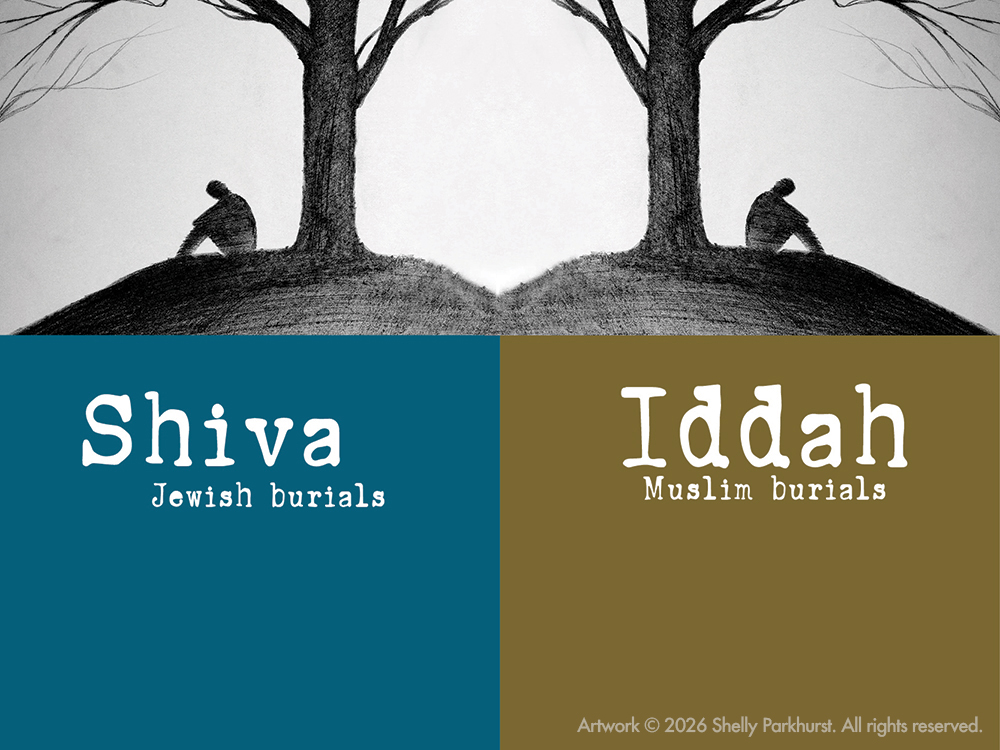
Both Jewish and Islamic traditions place the highest importance on caring for the deceased with dignity, speed, and spiritual intention. Comparing our traditions reveals deep parallels — and meaningful differences — in how we accompany the dead on their final journey.
Islamic Funeral Practices
According to Islamic law (shariah), the body should be buried as soon as possible after death — a principle shared with Jewish tradition. A local Islamic community organization should be contacted immediately to help make arrangements, identify an appropriate funeral home, and coordinate with the family.
To prepare the body for burial, it must be washed (Ghusl) and shrouded (Kafan). Close same-sex family members are encouraged to perform the washing, though a spouse may also do so. The body is washed three times. This parallels the Jewish Taharah in its emphasis on ritual cleansing and same-gender care.
To shroud the body, three large white sheets of inexpensive material are laid on top of each other — a simplicity that mirrors the Jewish tachrichim, reminding both traditions that all are equal in death.
Organ donation is generally acceptable in Islam, following the Qur'an's teaching: "Whosoever saves the life of one person it would be as if he saved the life of all mankind." Cremation, however, is forbidden (haram) in Islam.
After the funeral and burial, the immediate family gathers and receives visitors. It is customary for the community to provide food for the first few days of mourning — typically three days. This parallels the Jewish tradition of shiva, during which the community provides meals and comfort to mourners.
What We Share
Prompt burial: Both traditions call for burial ideally within a day or two of death.
Simple white shrouds: Both use plain, inexpensive white garments, affirming equality and humility in death.
Ritual washing: Both involve careful, modest washing of the body by same-gender community members.
Community comfort: Both traditions gather to feed and comfort the bereaved in the days after burial.
Simplicity over display: Both discourage elaborate display in favor of dignity.
Future topics in this series: Planning for a Jewish Funeral • Jewish Cemetery Guidelines • Bereavement Resources at Our Library • Jewish Funerals in Film and Theater
Cary Mannaberg