
Congregation of Moses News
Learn More About the CoM Solar Array
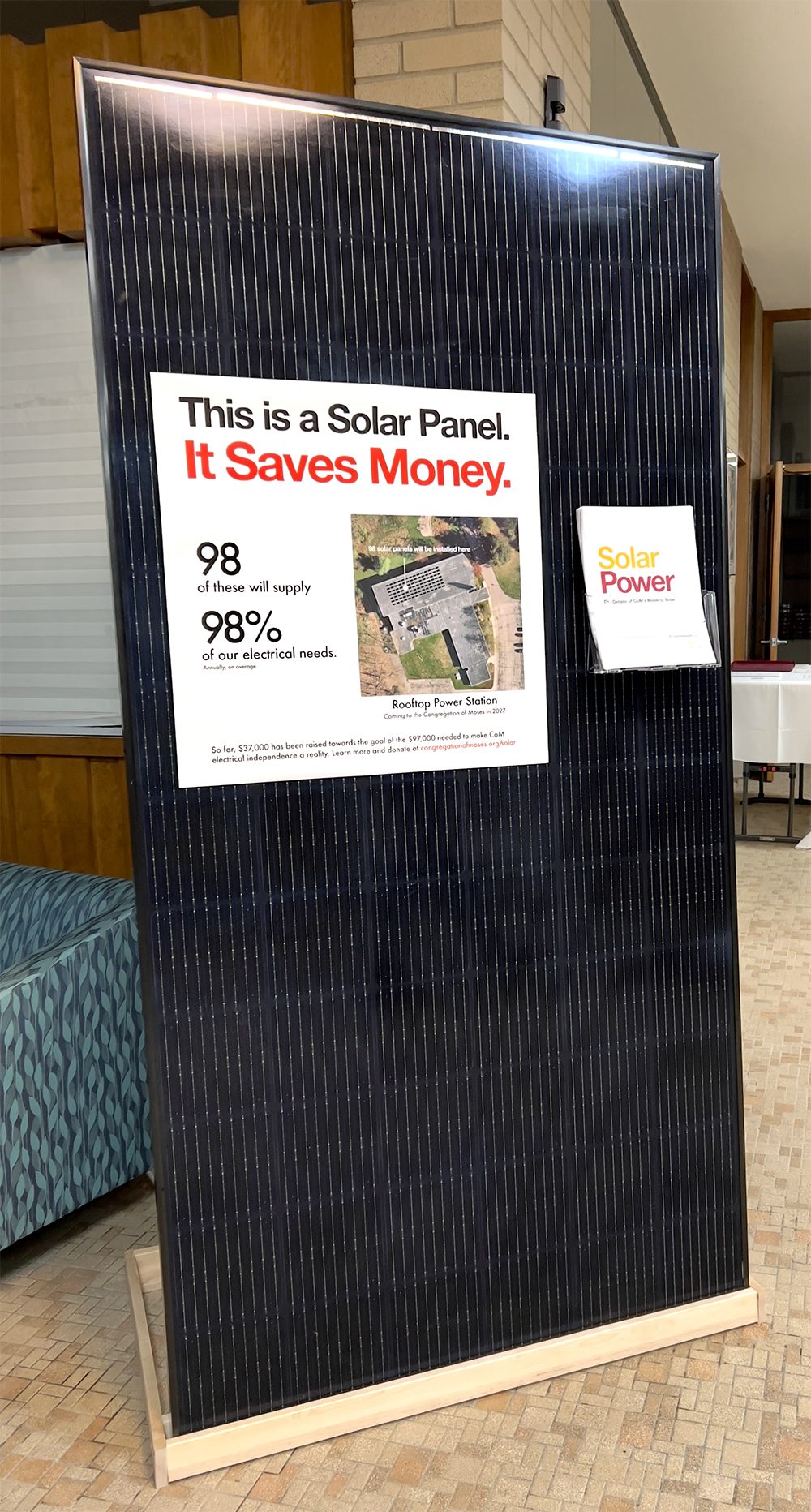
If you have visited the Congregation of Moses recently, you have probably noticed the lobby display of a sample solar panel. The display is intended to highlight our upcoming solar project.
When the 98-panel array is installed (planned for 2027), it will provide 98% of our electrical use on average over the year, saving CoM many thousands of dollars in electrical costs. This is a forward-looking and exciting change for our congregation.
Here is some detailed information about the panels, their capacity and how they work.
530 Watts per Panel
Each panel is rated at 530 watts
High-Efficiency Solar Technology
With a rated efficiency of 22.3%, these panels use advanced N-type solar cell technology designed to perform well in a variety of conditions.
Bifacial: Capturing Light From Both Sides
Unlike a traditional solar panel that primarily collects sunlight from the front, these bifacial panels can also use light reflected onto the backside of the panel to generate electricity.
This can be especially beneficial when reflective surfaces are present. During the winter, for example, sunlight reflecting off snow on the roof can reach the backside of the panels and contribute additional solar production when conditions allow.
Made in the USA
Silfab manufactures these solar panels in the United States, supporting domestic solar manufacturing.
Built for Long-Term Performance
The panels include a 25-year product warranty and a 30-year performance guarantee.
At the end of 30 years, Silfab guarantees the panels will still produce at least 89.3% of their original rated power.
Built for Michigan Weather
The panels are engineered to withstand demanding outdoor conditions, including significant wind and snow loads.
They have also been tested for impact from hailstones up to 2 inches in diameter traveling approximately 72.5 mph.
Designed to Perform in Changing Conditions
The panel's N-type technology provides improved low-light performance, improved shade tolerance, better high-temperature performance, and reduced long-term degradation.
Is there anything you'd like to know that isn't answered here? Please email us - we'd welcome your questions.