
Rabbi Jill Jacobs’ Remarks at August 4, 2025 NYC Protest
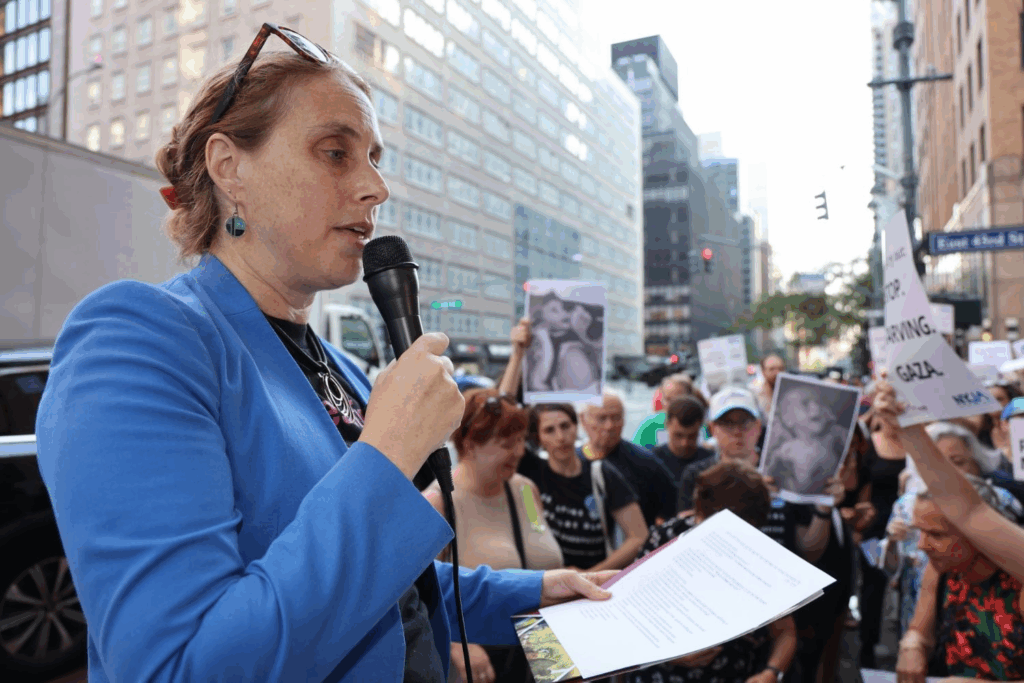
“Today, the Temple is burning."
“We may have observed Tisha B’av–the Ninth of the Hebrew month of Av– yesterday, but our tradition teaches that while the fire was ignited on the ninth, the Temple actually mostly burned on the 10th. We fast and mourn on the ninth because that’s the day when the disaster began.“But disasters can’t really be contained to one day. That’s why some Tisha B’Av restrictions last into the 10th day. And even before the destruction of the Temple, there was corruption and hatred and a siege and a group of zealots forcing the people into an ill-conceived war. Nor did the pain stop after the destruction. We have felt the repercussions–widespread death and destruction, hunger, the loss of home–for millennia.
“It was impossible to read Eicha on Saturday night without hearing the echoes of Gaza–nursing infants whose tongues stick to the top of their mouths out of thirst; children begging their parents for bread; desperate people selling their prized possessions for a morsel of food. These are all images from our sacred text, and they have become too real in Gaza today.
“The Talmud comments that death by famine is worse than death by sword. This is clear from the horrific scenes from Gaza today.
“Like the destruction of the Temple, this disaster, too, has been building for a long time. On October 12, 2023, T’ruah–the organization I lead, 2300 rabbis and cantors strong–called for humanitarian relief saying, in part, 'In our mourning, fear, and despair, we cannot lose our humanity. . . sealing the border will result in the deaths of more innocent people.'
“I wish we had been wrong.
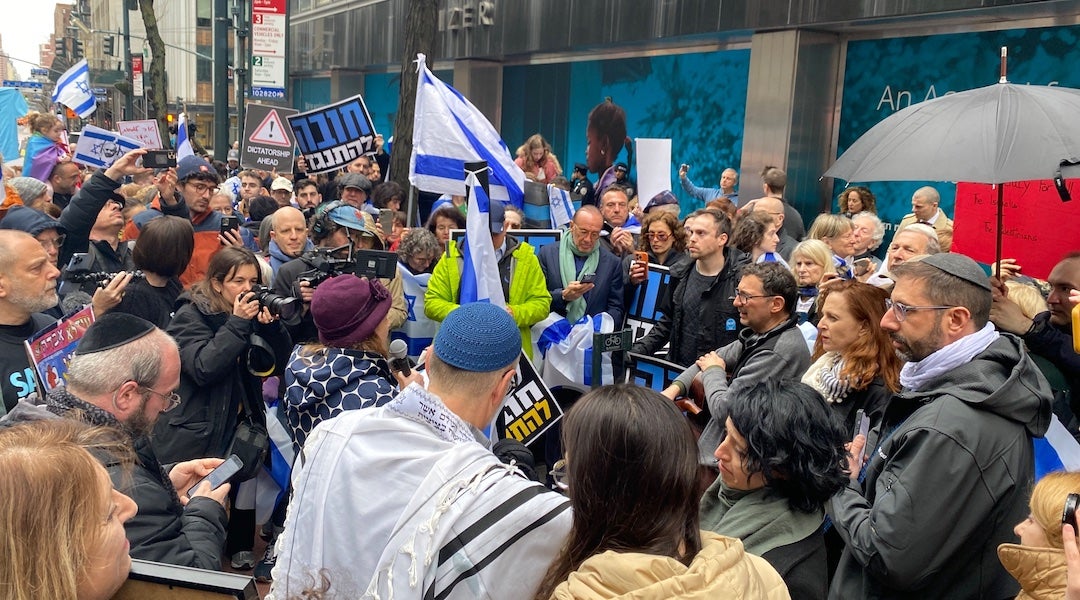
“At the end of November 2023, I was in Israel during the first ceasefire. I stood in Hostage Square in Tel Aviv each night, watching as the faces of those released that night flashed on the screen. In Gaza, there was finally relief from the bombings.
“It could have ended then. But two years later, the war drags on and the humanitarian catastrophe we and many others warned about has tragically come to pass. Since October 7, when more than 1200 Israelis were killed and nearly 250 taken captive, over 60,000 Palestinians, including more than 18,000 children, have been killed, as have some 900 Israeli soldiers and dozens of hostages and other Israelis. As we saw in brutal videos released this week, the remaining living hostages are in mortal danger. And now, nearly 200 Palestinians have died of starvation in the last few days–in addition to the thousands killed by Israeli soldiers while seeking food.
“Last week a minyan of rabbis, including me, were arrested blocking the street outside the Israeli consulate. The next day, another two dozen rabbis were arrested in D.C. More than 1000 rabbis worldwide have added their names to a letter– all calling for an end to the starvation. The moral voice is growing.
“Today, we join the hundreds of thousands of Israelis who have been in the streets for nearly two years calling for an end to the war that long ago ceased to be about protecting Israel or returning hostages–indeed Israelis know that the government has abandoned the hostages. Instead, it has become a war of revenge and settlement, driven by an extremist government.
“In our liturgy, this coming shabbat is Shabbat Nachamu, the beginning of consolation, and, we hope, ultimately redemption. But in real life, consolation is nowhere to be found.
“We are here today to call on the U.S. government to do everything in its power to bring about an end to this war, to compel Israel to surge food into Gaza, and to bring the hostages home. This is only the first step in containing this disaster. We also need a political solution that ensures that both Jews and Palestinians can enjoy human rights, dignity, safety, and self determination.
“Today, the Temple is burning. But more Jews around the world than ever are crying out for safety and justice for Palestinians and Israelis. Together, we can move from disaster to consolation and redemption.”
Rabbi Jill Jacobs (she/her) is the CEO of T’ruah: The Rabbinic Call for Human Rights, an organization that trains and mobilizes more than 2,300 rabbis and cantors and their communities to bring a moral voice to protecting and advancing human rights in North America, Israel, and the occupied Palestinian territories. She is the author of Where Justice Dwells: A Hands-On Guide to Doing Social Justice in Your Jewish Community and There Shall Be No Needy: Pursuing Social Justice through Jewish Law and Tradition, both published by Jewish Lights.
She has been published in The Washington Post, Slate, NBCNews.Com, JTA, the Forward, the Jerusalem Post and other publications. She has appeared as a commenter on MSNBC, CNN, CodeSwitch, and other media. She has been named three times to the Forward’s list of 50 influential American Jews and to Newsweek’s list of the 50 Most Influential Rabbis in America.”